“Katmai National Park and Preserve, the epitome of wildlife phenomena,
has occupied my head long before this opportunity.”
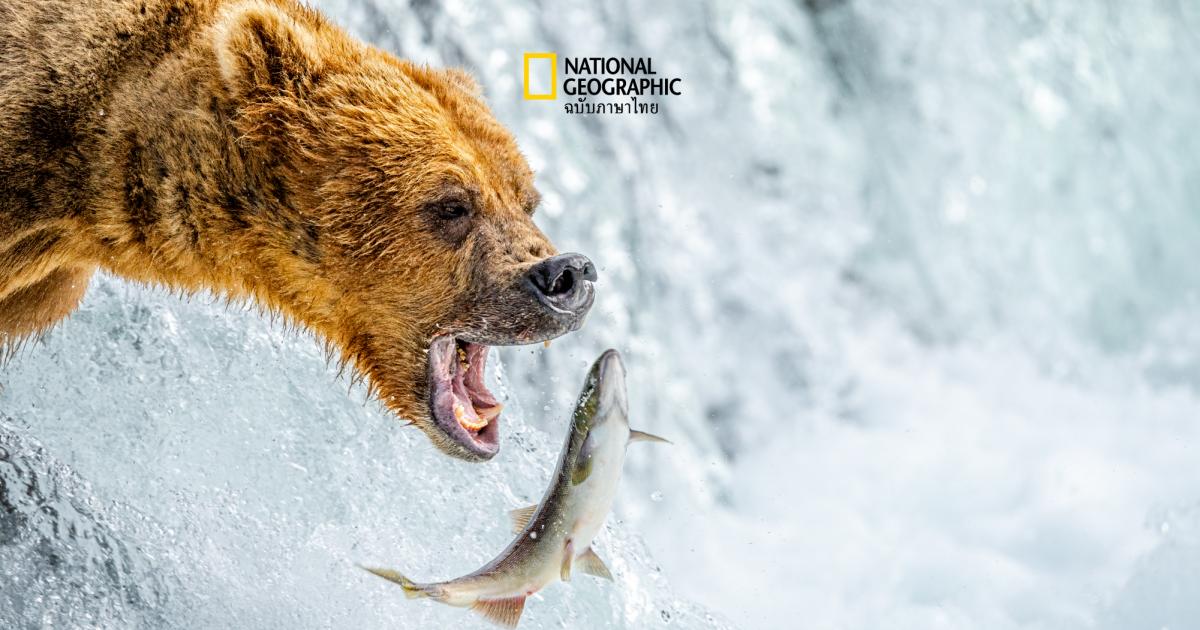
I discovered its fascinating nature through the documentations of other photographers and filmmakers as a child being born in the digital era. The image of bears atop a waterfall catching salmon that shoot out of the whitewater has been a dream shot for years. Ultimately, I was able to luckily experience this phenomenon myself allowing me to share my experiences.
To visit this epitome of nature myself, I had to take a flight from Anchorage, Alaska, to King Salmon aboard a Katmai air, crossing a vast and untouched landscape of endless rivers. Next I had to take another connecting flight to Brooks camp which is home to the iconic waterfall and my dream shot.
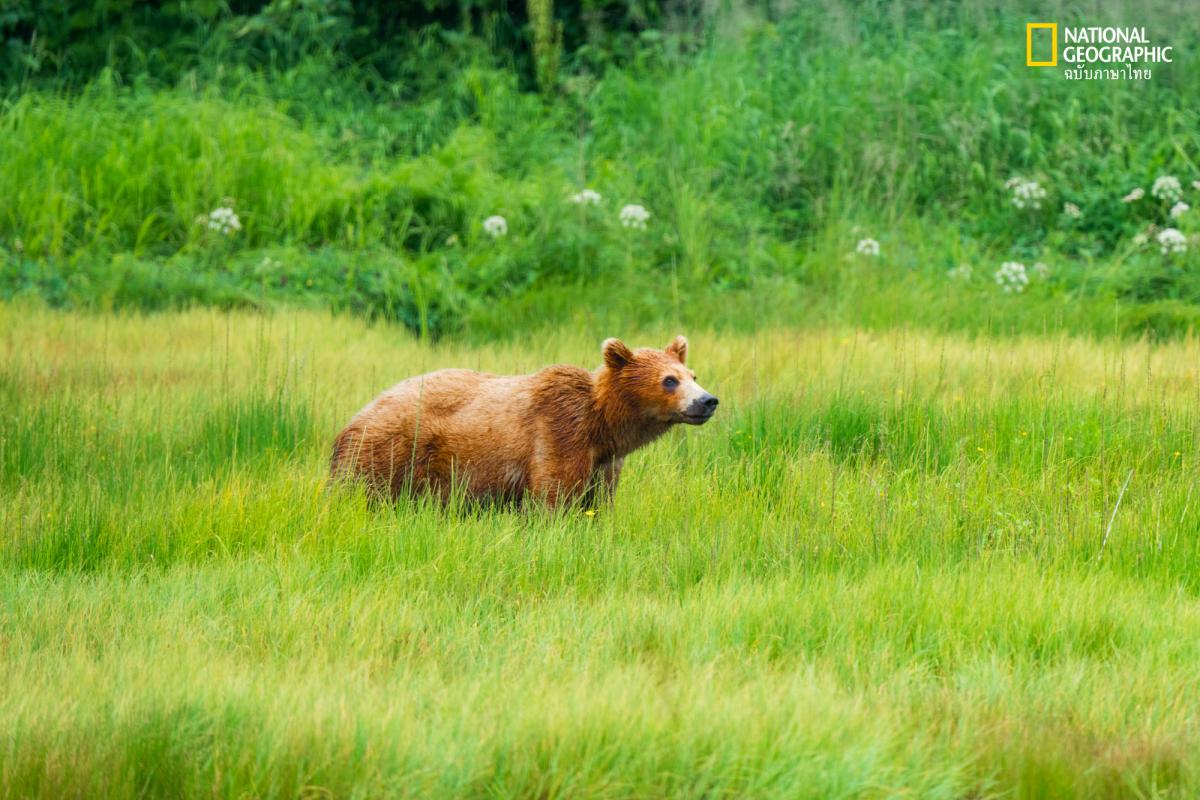
My excitement skyrocketed experiencing how remote it is. Surprisingly, every visitor was required to be lectured on behavioural conducts and rules on how to behave near bears and avoid danger such as the ban of food items; in my opinion, this is the perfect example of well managed ecotourism.
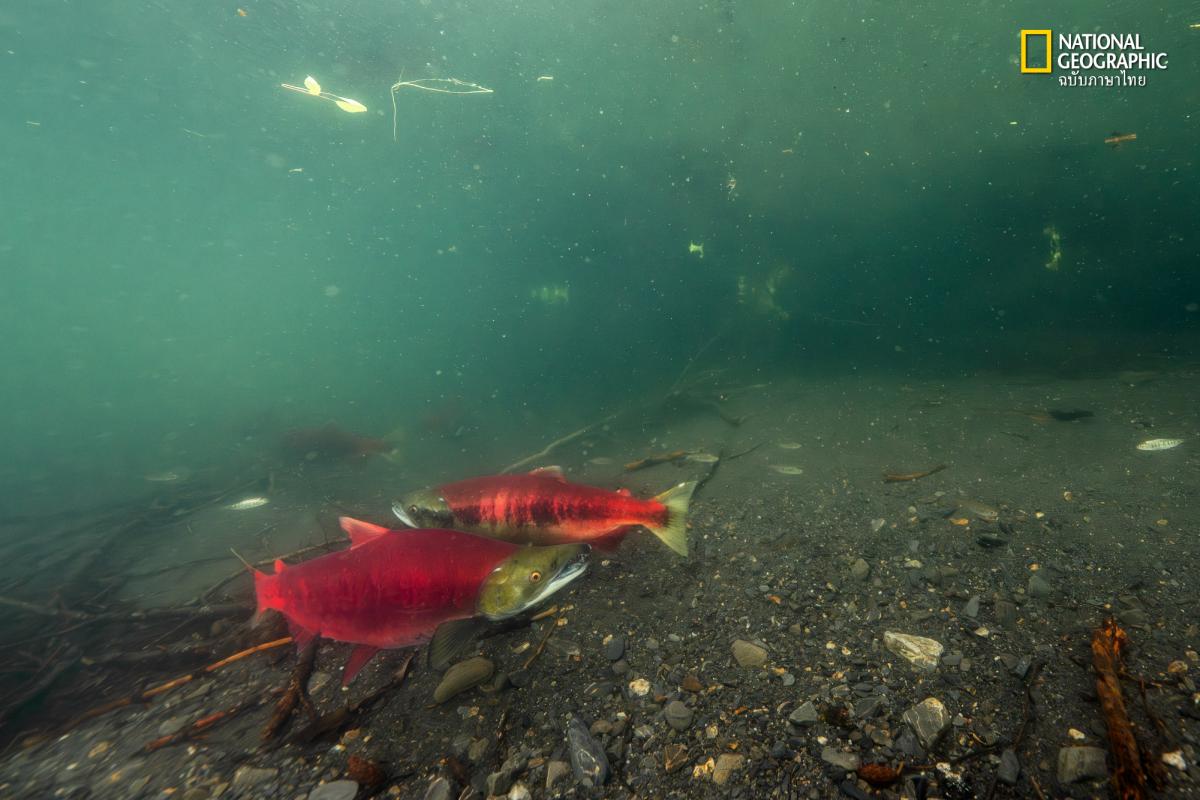
At Brooks Falls, dozens of brown bears assemble, some travelling over 100 kilometers just to reach the salmon run. This event, where millions of Pacific salmon migrate from the ocean back into Alaska’s rivers.
Peaking between late June and July, this short period provides a critical food source for brown bears, which emerge from hibernation hungry and muscle worn, having eaten nothing for 6-7 months. By July, a male bear can catch and eat over 40 sockeye salmon per day, roughly worth 4500 calories each. Over the season, bears can gain over 250 kilograms before returning to hibernation (National Park Service, 2024).
It is important to note that the role of Brown bears at Katmai is not just being a beneficiary of the salmon run, they are described as a keystone species: organisms that exert a disproportionately important influence on the ecosystems in which they live (Helfield, 2006).
Since the salmon run transfers vast amounts of marine derived energy such as nitrogen, phosphorus and carbon back inland (Holtgrieve, 2009), bears act as the primary transporters. They often drag salmon carcasses away from rivers into the forests, sometimes even hundreds of meters away, where the uneaten remains—including the skin, brain, and eggs which bears selectively feed on (Gende, 2001)—decompose and release crucial nutrients into the soil.
These nutrients are absorbed by plants and trees, increasing growth and productivity of the surrounding ecosystem. Stable nitrogen isotope analyses show that roughly 15-18% of the nitrogen in riparian white spruce forests originates from salmon, and over 80% of that marine nitrogen redistributed onto land by brown bears (Hilderbrand et al., 1999).
This highlights the brown bear’s importance as powerful nutrient transporters that convert the salmon run into long term forest fertility. Originally, Brooks Camp was not a wildlife spot but a fishing outpost to serve anglers drawn to salmon at Brooks River. Its transformation began after the establishment of Katmai National Park and Preserve in 1918 designed to protect the region’s volcanic landscape.
Eventually, brown bears congregating at the river became impossible to ignore, Brooks Camp evolved into a center for bear conservation and observation. Despite exponentially increasing demand and number of visitors, tourism was tightly controlled through permits and briefings. Economically, Brooks Camp plays a huge role in Alaska’s wildlife based tourism economy as visitors alone in nearby gateway communities totaled approximately $79 million in 2021, supporting 975 local jobs and producing more than $37 million in labor income (Thomas et al., 2022).
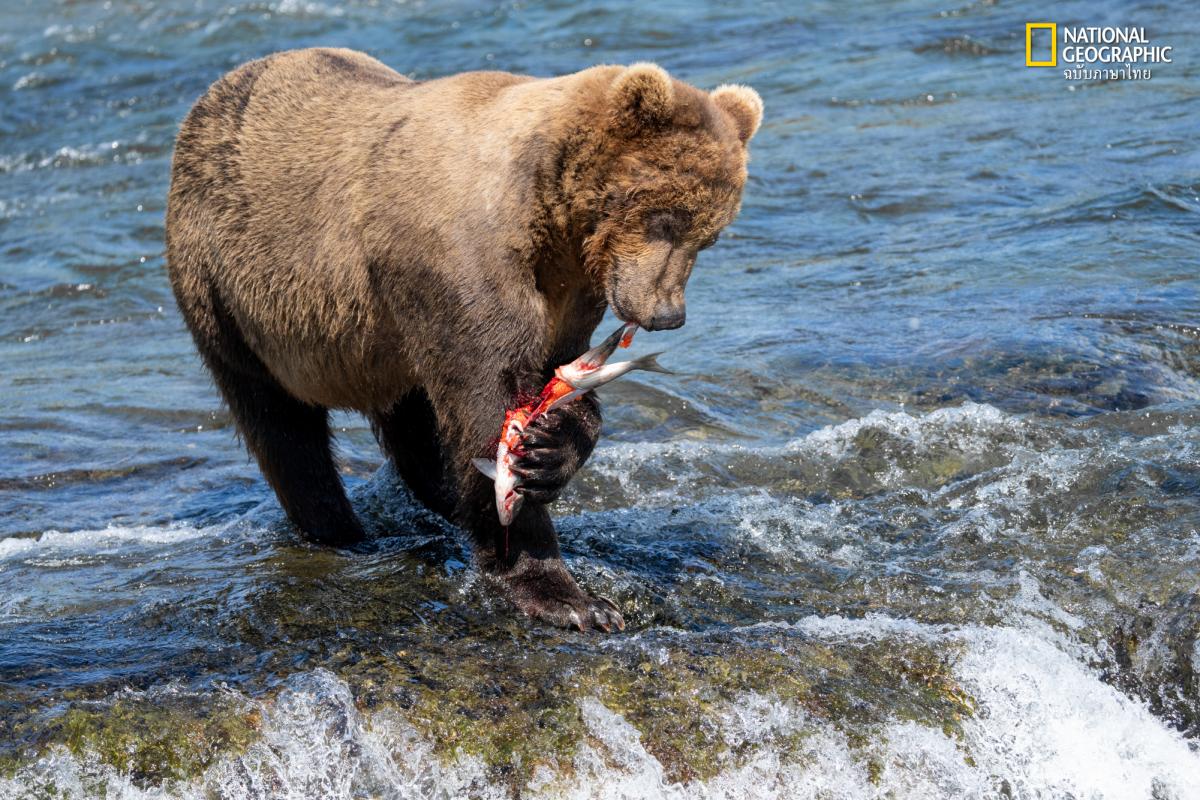
Altogether, this visitor activity contributed nearly $70 million to the regional gross domestic product (GDP). I could see this clearly during my time in Katmai where many visitors willingly accept the high costs, limited access and inconvenience of waiting just for the chance to observe brown bears fish salmon out of the river. Studies say a single day of bear viewing here generates around $287 per person in consumer surplus (Richardson, 2022), suggesting the experience here is worth far more than what is paid. Even far beyond Katmai, 24 hour live bear webcams now create nearly $27 million in annual indirect benefits proving the rarity and true value of this heaven on earth.
During my expedition, as I made my way through Brooks Camp, I was struck by the sight of anglers standing in the river alongside bears. Both the bears and anglers mutually respected each other, without tension and with predictability. This emphasizes the remoteness and carefully managed access of Katmai that allow wildlife and people to safely coexist.
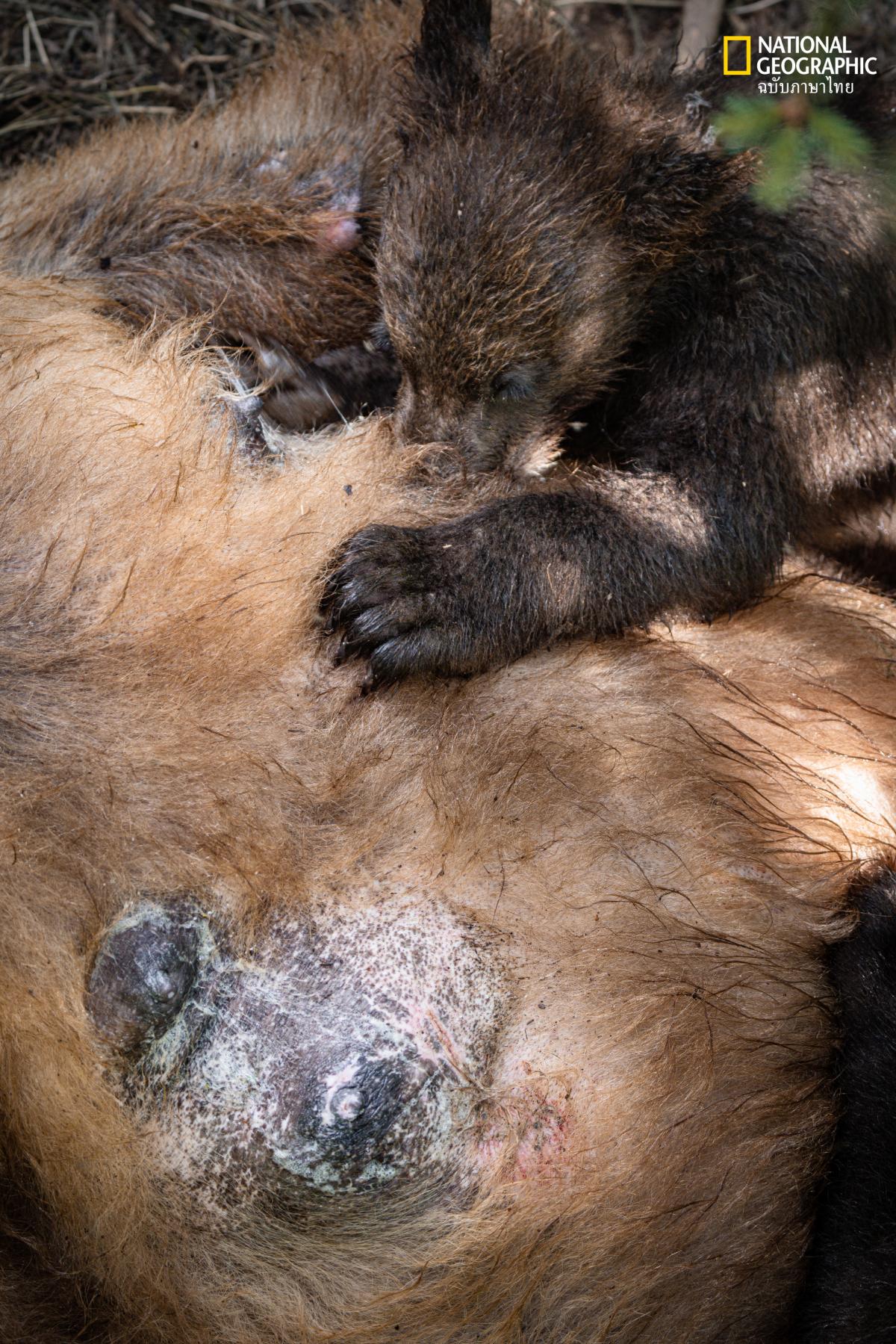
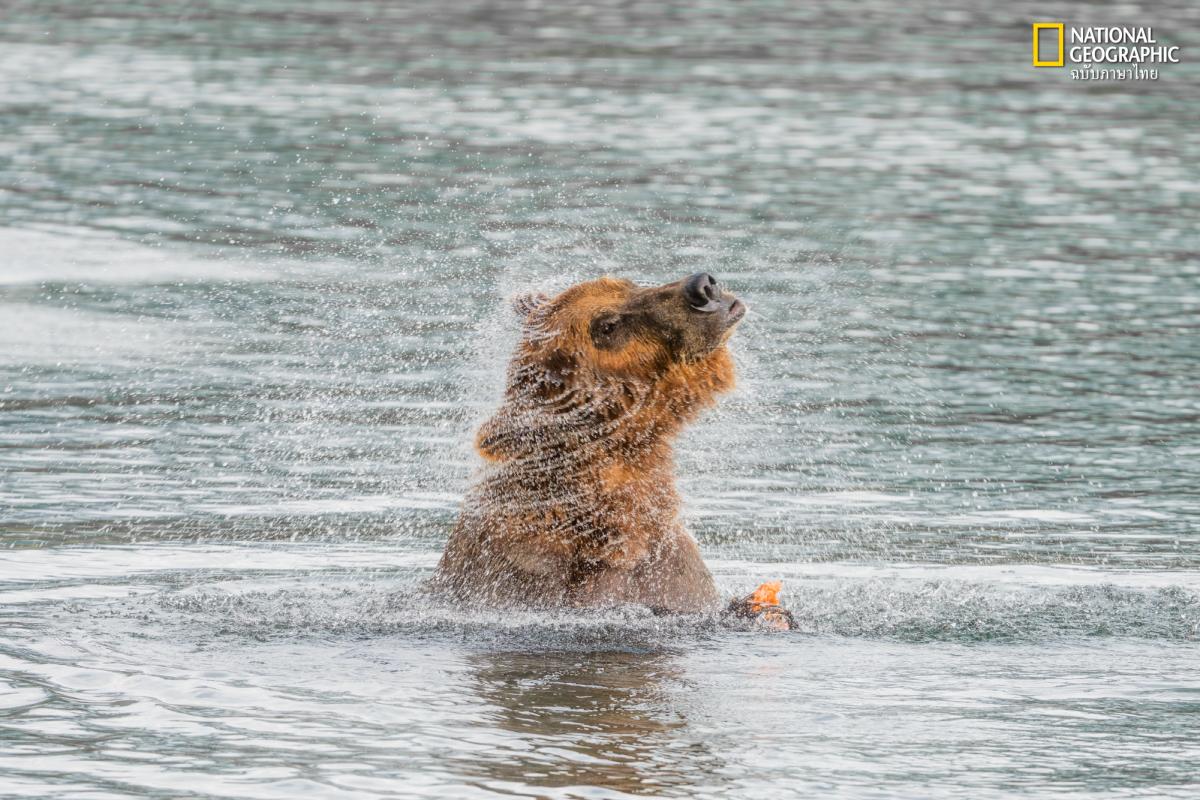
I followed the 2 km trail at Brooks Camp toward the viewing platforms, and since bears regularly use the same trails as humans without disturbance, with every step the lives of bears unfolded around me. Cubs wrestled in the shallows of a quiet bay, while large males sauntered with authority along the shoreline. Beneath a lone tree, a mother paused to nurse her two cubs and at the river’s edge, lies the scene I had imagined for years: salmon launching themselves up the waterfall, directly into the waiting mouths of bears.
Being so close to brown bears was initially unsettling, not because of fear alone, but because it forced me to confront how little control I had. Over time, that feeling shifted into respect as I learned to read their behavior and trust the boundaries in place. Patience proved essential to photographing these creatures, the perfect moment only occurs a few times a day hence I only had minimal opportunities to get my photo right.
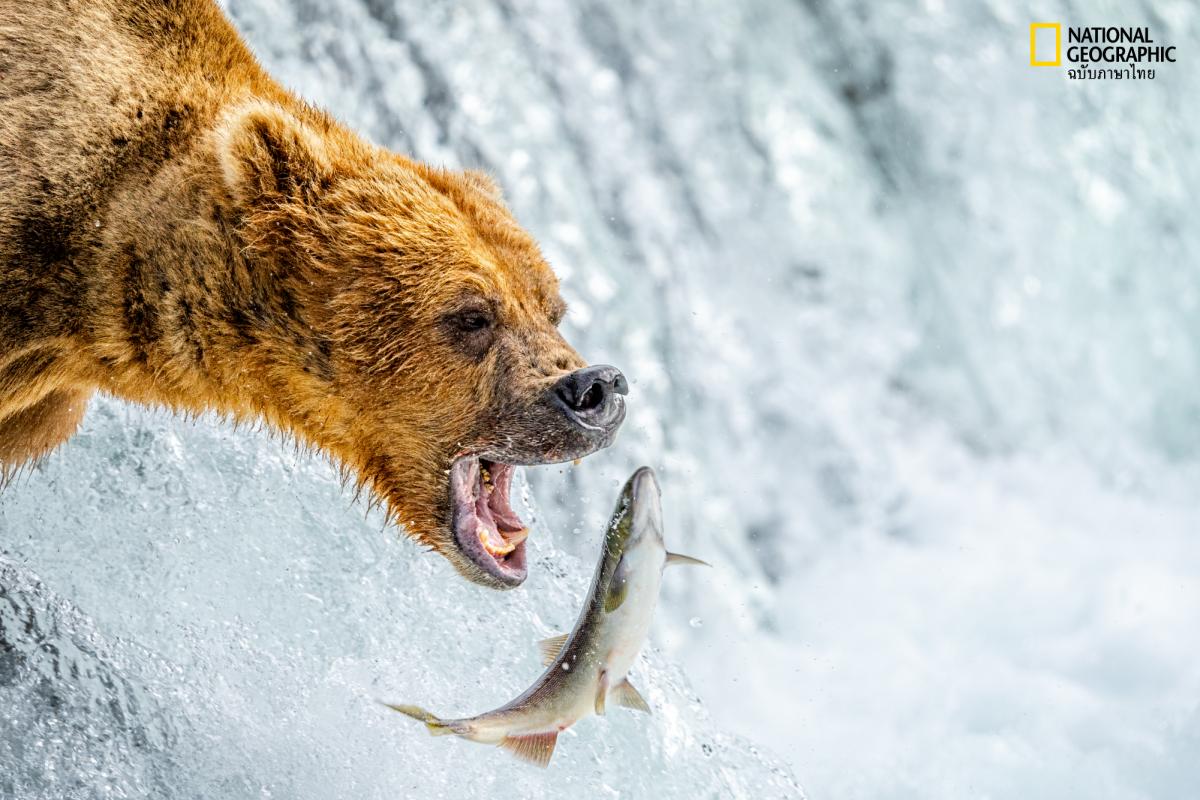
To photograph the bears without violating distance regulations, I relied on a 200–600mm telephoto lens paired with a Sony A1, allowing me to capture fine details from 50 yards away to avoid disturbance while achieving a close up image. I shot at 1/1000 second or faster to freeze the rapid action of fishing bears, using 30 fps burst mode to catch moments that often lasted less than a second.
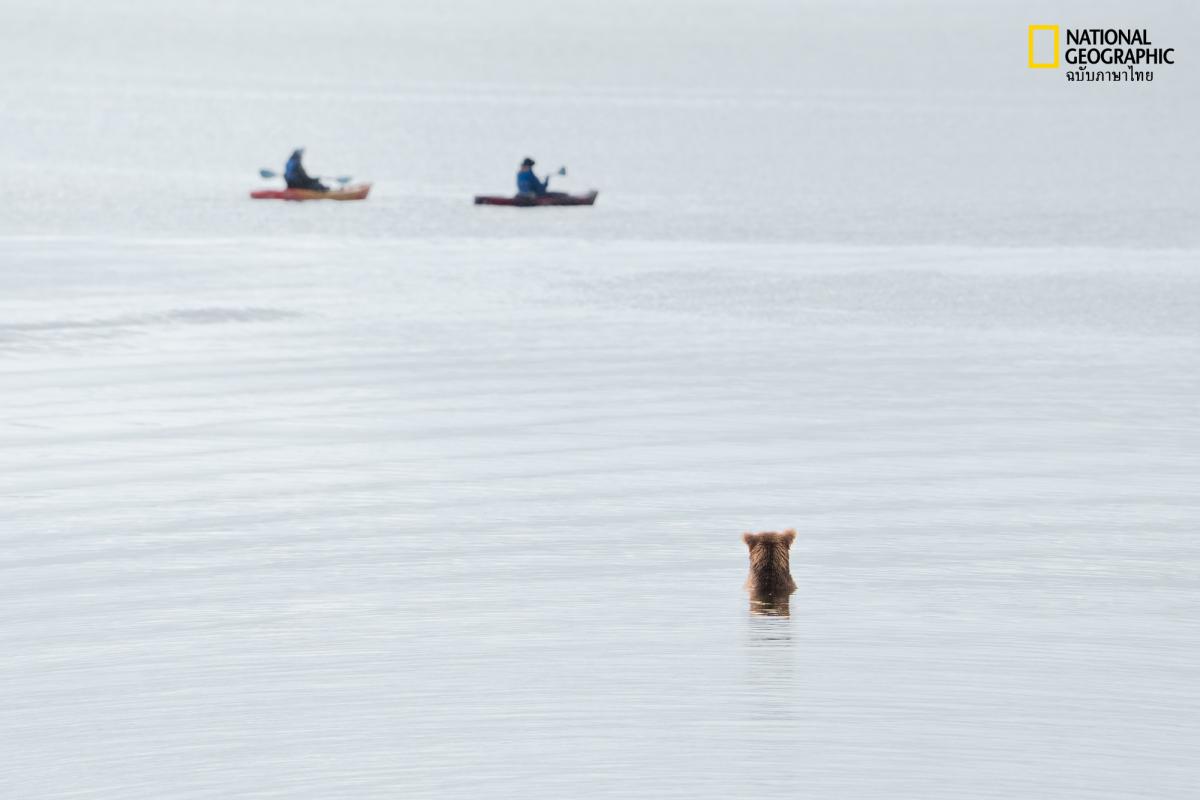
The process was physically demanding since tripods are banned at Katmai, so a monopod became essential, saving my arms during hours of continuous shooting that ultimately filled two memory cards. The bears’ behavior was unpredictable, and maintaining precise focus for extended periods was frustrating at times, but that difficulty made the final images more meaningful. In the end, the exhaustion felt like a small price to pay, and I’m proud of the photographs I came away with as the day went by very fast.
What I enjoyed most about Katmai was not just witnessing bears fishing salmon, but seeing how order, restraint, and respect allow such moments to exist at all. I found it fascinating that a place so wild could function through carefully designed rules such as visitor limits, mandatory education, and trust in science rather than fences or spectacle.
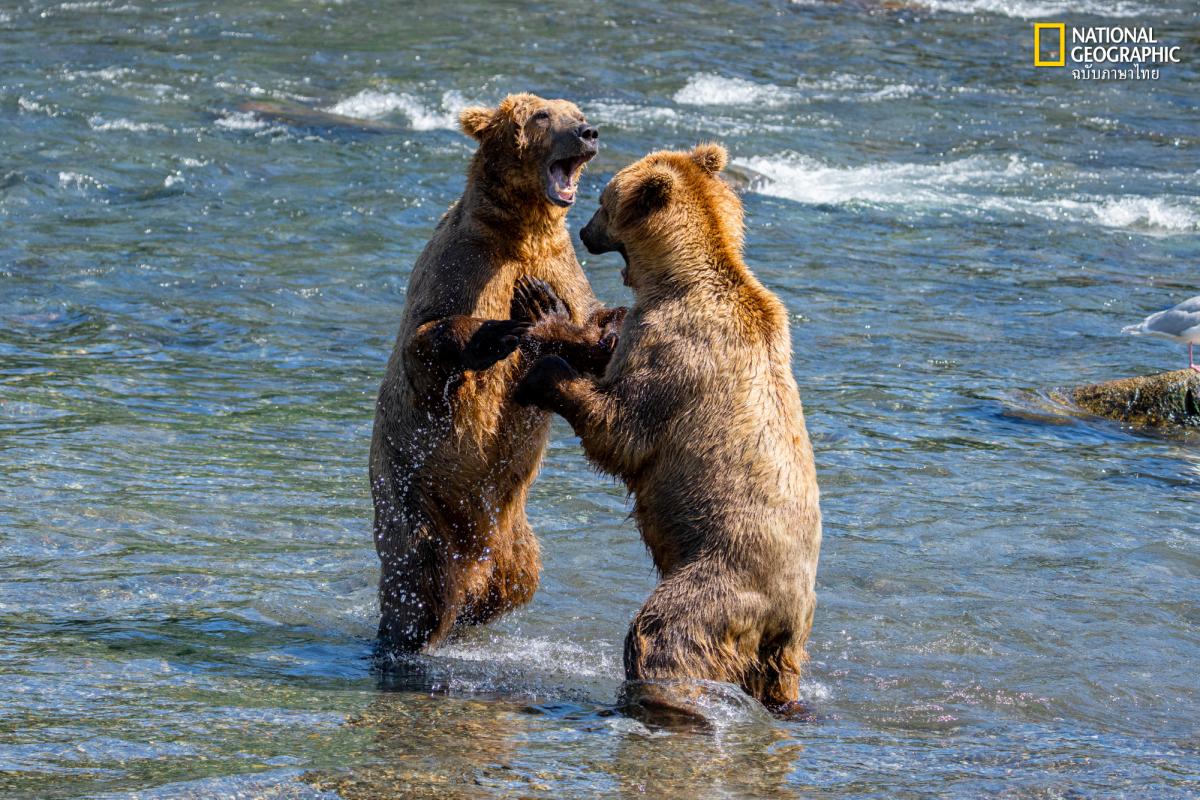
This model offers valuable lessons for Thailand, where wildlife tourism often prioritizes high visitor numbers over impact; Katmai shows that limiting numbers, enforcing distance, and educating visitors can enhance both conservation and visitor experience. Yet even here, the future is uncertain. Climate change threatens salmon runs through warming waters and human infrastructure alter river flows, while habitat loss elsewhere continues to pressure bear populations across their range.
To me, Katmai stands as both a success story and a reminder: protecting wildlife is not about bringing people closer to wildlife, but knowing how to respect it.
Story and photography by Tinnapat Netcharussaeng
References
Gende, S. M. (2001). Consumption choice by bears feeding on salmon (3rd ed., Vol. 127). Oecologia.
Helfield, J. M. (2006). Keystone Interactions: Salmon and Bear in Riparian Forests of Alaska. College of Forest Resources, University of Washington, Box 352100, Seattle, Washington, 98195, USA.
Hilderbrand, G. V., Alaska Department of Fish and Game, Division of Wildlife Conservation, United States Forest Service, Pacific Northwest Research Station, & Departments of Natural Resource Sciences and Zoology, Washington State University. (1999). Role of brown bears (Ursus arctos) in the flow of marine nitrogen into a terrestrial ecosystem. Oecologia, 121(1999), 546-550.
Holtgrieve, G. W. (2009, March 18). Large predators and biogeochemical hotspots: brown bear (Ursus arctos) predation on salmon alters nitrogen cycling in riparian soils. Ecol Res, 24(September 2009), 1125-1135.
National Park Service. (2024, October 29). Brown Bear Frequently Asked Questions – Katmai National Park & Preserve (U.S. National Park Service. Retrieved January 25, 2026, from https://www.nps.gov/katm/learn/photosmultimedia/brown-bear-frequently-asked-questions.htm#33
Richardson, L. (2022). The Economic Benefits of Wildlife: The Case of Brown Bears in Alaska (1st ed., Vol. 20). Western Economics Forum. –
Thomas, C. C., Flyr, M., & Koontz, L. (2022). 2021 National Park Visitor Spending Effects Economic Contributions to Local Communities, States, and the Nation